
2025 Industrial Real Estate Market Trends. Emerging Hotspots for Small Businesses
As the global economy evolves and e-commerce continues to dominate consumer behavior, small and mid-sized businesses (SMBs) are facing new logistical challenges. Traditional long-term industrial leases and static warehouse models no longer fit the pace or unpredictability of today’s supply chains.
That’s where flex warehousing — short-term, scalable, and on-demand storage solutions — is reshaping how businesses think about industrial space. In 2025, this model isn’t just a trend; it’s becoming a necessity.
What Is Flex Warehousing?
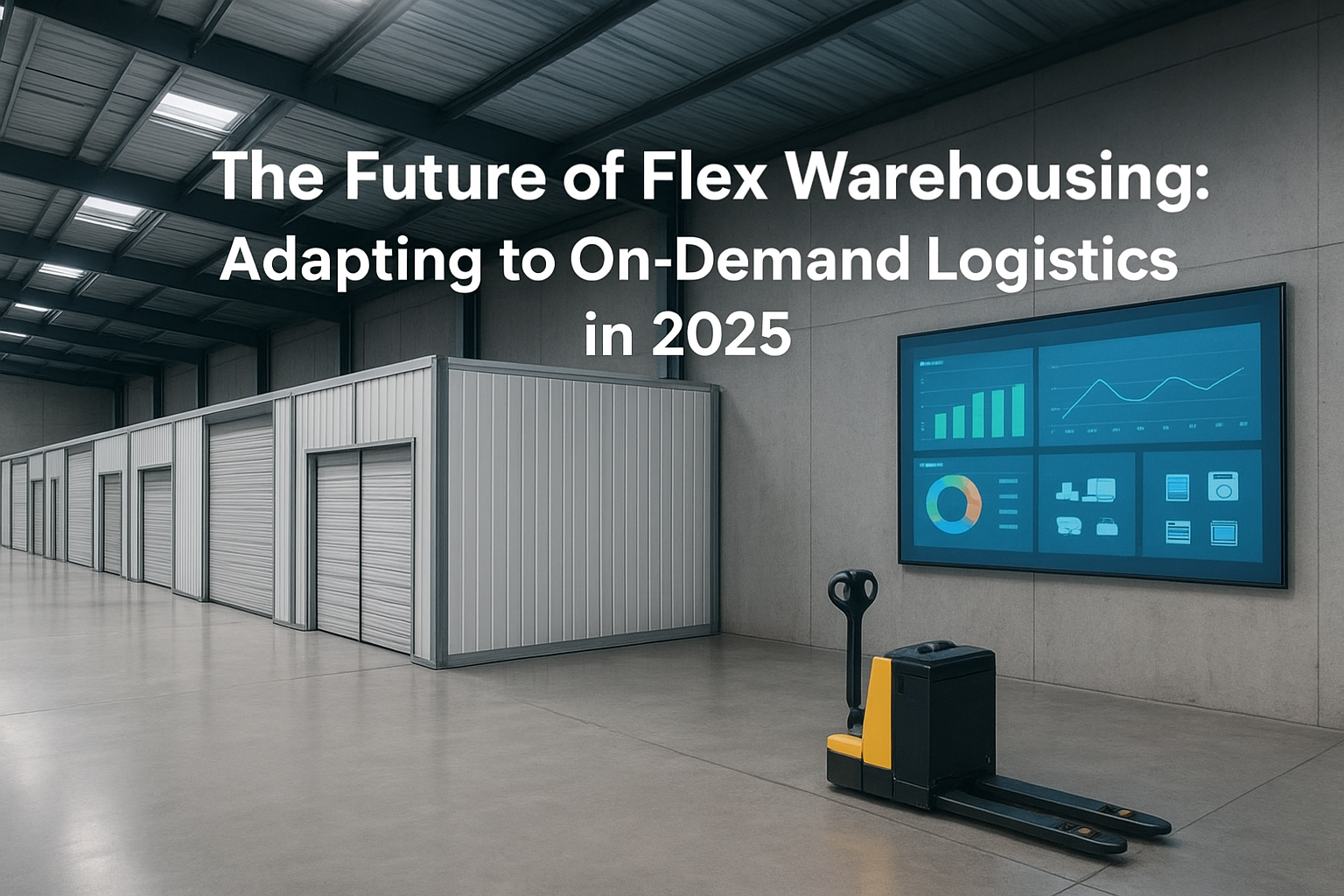
Flex warehousing allows companies to lease warehouse or storage space on a flexible basis, often for months or even weeks rather than years. Instead of committing to a massive facility, tenants can rent the exact amount of space they need — when they need it — and scale up or down based on demand.
This concept has been accelerated by several forces:
-
The continued rise of e-commerce and omnichannel retail
-
Growing demand for faster delivery times
-
Supply chain unpredictability due to geopolitical shifts and logistics costs
-
The expansion of 3PL (third-party logistics) and shared warehousing platforms
In short, flex warehousing offers a more agile, data-driven approach to industrial real estate — and it’s transforming how small businesses operate.
Why It Matters for Small Businesses
For small companies, traditional warehouse leasing can be a huge financial strain. Multi-year leases, high upfront deposits, and fixed square footage create risks when sales fluctuate or seasonal inventory changes.
Flex warehouse models provide an alternative:
-
Lower risk: Businesses can test new markets or locations without long-term commitments.
-
Cost control: Pay only for the space and duration you actually use.
-
Operational agility: Scale up storage during peak seasons and downsize when demand dips.
-
Access to prime locations: Flex providers often offer urban or near-port spaces that small firms might otherwise find unaffordable.
This adaptability is particularly valuable for startups, DTC (direct-to-consumer) brands, and small distributors that need to compete with larger logistics players.
Technology Driving the Shift
The rise of flex warehousing is tied closely to advancements in proptech and logistics tech. Platforms now match available warehouse space with tenants in real time — similar to Airbnb, but for industrial real estate.
Key technologies enabling this model include:
-
IoT sensors and smart inventory systems that provide real-time visibility
-
Cloud-based warehouse management systems (WMS) for shared spaces
-
Digital leasing platforms simplifying contracts and payments
-
AI-driven demand forecasting helping operators optimize space usage
These innovations make short-term leasing efficient and transparent, benefiting both landlords and tenants.
How Landlords Are Responding
For property owners, flex warehousing presents both a challenge and an opportunity. Traditional landlords must adapt to shorter lease terms and more frequent tenant turnover. However, many are finding ways to turn flexibility into a competitive advantage.
Some owners are:
-
Reconfiguring large facilities into modular or divisible units
-
Offering plug-and-play solutions with pre-installed racking, office space, and dock access
-
Partnering with 3PLs and marketplace platforms to fill unused capacity
This shift allows landlords to capture new demand streams and reduce vacancy risks — especially in smaller industrial markets.
Regional Hotspots for Flex Warehousing in 2025
As of 2025, several U.S. markets are emerging as flex warehousing hotspots:
-
Dallas–Fort Worth – Central logistics hub with growing demand for short-term space.
-
Phoenix & Las Vegas – Affordable options for West Coast distribution overflow.
-
Atlanta – Strong e-commerce ecosystem and major transportation network.
-
New Jersey & Inland Empire – High demand for last-mile and urban delivery centers.
Secondary and tertiary markets are also benefiting, as businesses seek lower-cost alternatives outside congested metros.
The Bottom Line
Flex warehousing isn’t just a short-term fix — it’s a reflection of a larger shift toward on-demand industrial space. For small businesses, it’s a path to operational freedom, reduced costs, and faster growth. For investors and landlords, it’s an invitation to rethink how industrial real estate can serve the evolving logistics landscape.
In 2025, the most successful players in industrial real estate will be those who embrace flexibility — not just in their spaces, but in their mindset.