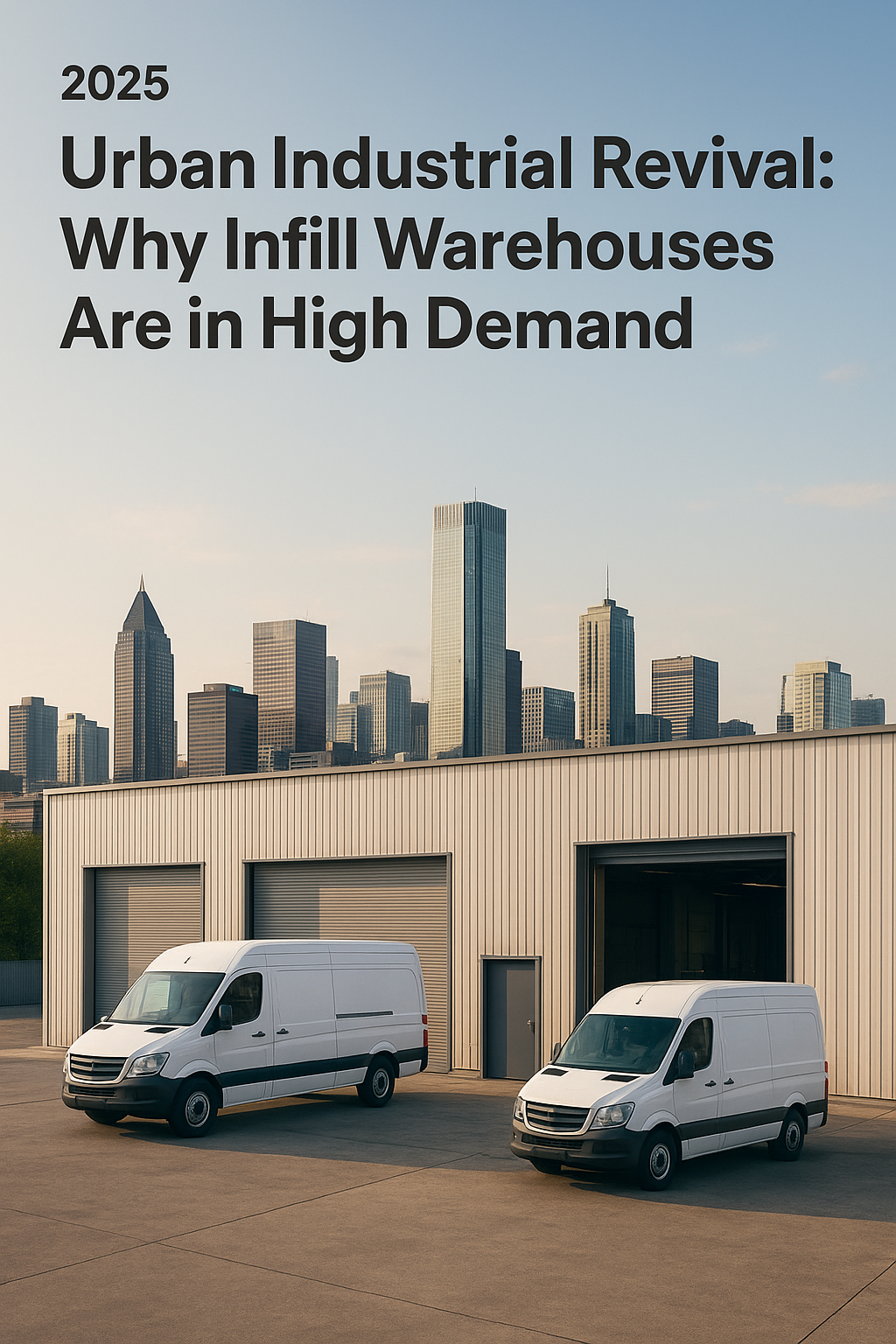
In 2025, the industrial real estate landscape is experiencing a powerful shift — one that’s bringing warehouses and light industrial spaces closer to where people live and work. As logistics networks evolve to meet the demands of same-day delivery and sustainable operations, infill industrial properties have emerged as one of the hottest segments in the market.
These urban or near-urban warehouses are redefining how small and mid-sized businesses manage distribution, storage, and fulfillment in a world where speed is everything.
What Is an Infill Industrial Property?
Infill industrial refers to industrial buildings located within or near major population centers, often developed on underutilized or redeveloped urban land. Unlike traditional distribution centers built on the outskirts of cities, infill properties sit strategically closer to consumers, reducing delivery times and transportation costs.
These facilities might range from:
Small, multi-tenant warehouses serving local businesses
Last-mile delivery hubs for e-commerce and logistics firms
Light manufacturing or flex spaces for urban production
Adaptive reuse projects, converting older industrial buildings into modern logistics assets
In short, infill industrial is where logistics meets location — and it’s becoming essential to modern supply chains.
Why Infill Industrial Is Surging in 2025
The resurgence of infill industrial space is driven by three key forces shaping today’s market: e-commerce growth, transportation costs, and consumer expectations.
1. The Last-Mile Imperative
Consumers now expect same-day or next-day delivery. That means businesses must store goods closer to their customers. Infill warehouses reduce the “last mile” of delivery — the most expensive and time-consuming part of the supply chain — allowing for faster fulfillment and lower costs.
2. Rising Transportation Costs
With fuel prices and labor expenses climbing, the cost of operating distant suburban or rural warehouses has skyrocketed. Locating distribution centers within urban corridors helps offset those costs by cutting travel time, optimizing routes, and improving fleet efficiency.
3. Sustainability and ESG Pressures
Companies are under increasing pressure to lower their carbon footprint. Infill industrial helps achieve this by reducing vehicle emissions, shortening transport distances, and supporting electric delivery fleets. Many tenants and investors now prioritize ESG-friendly properties that align with sustainability goals.
Why Small Businesses Are Benefiting Most
While large logistics companies like Amazon or UPS dominate the headlines, small and mid-sized businesses (SMBs) are among the biggest beneficiaries of infill industrial growth. These spaces allow smaller operators to:
Access dense customer bases without committing to massive suburban facilities
Offer faster delivery and pickup options for local customers
Reduce operating expenses by cutting transportation miles
Leverage shared or multi-tenant facilities with flexible lease terms
For a local retailer, manufacturer, or distributor, being within city limits can mean the difference between surviving and scaling.
Investment and Development Trends
Developers and investors are rapidly recognizing the long-term potential of infill industrial real estate. However, acquiring land and developing within city limits presents unique challenges — from zoning restrictions to higher land costs.
Still, the rewards are clear. Vacancy rates remain exceptionally low, and rental growth in urban industrial corridors continues to outpace suburban markets. Key investment patterns include:
Redevelopment of obsolete industrial or retail sites into modern warehouses.
Vertical industrial construction — multi-level warehouses designed for tight urban footprints.
Integration of automation and smart logistics systems to maximize space efficiency.
Public-private partnerships to support local job creation and infrastructure improvements.
Cities like Los Angeles, Chicago, Dallas, Atlanta, and New Jersey’s port corridor are leading the charge, while secondary markets like Nashville, Austin, and Charlotte are gaining momentum.
Challenges and Considerations
Despite strong demand, infill industrial comes with a unique set of challenges:
Limited available land: Urban space is scarce, making redevelopment projects highly competitive.
Zoning complexities: Many infill sites require rezoning or environmental remediation before redevelopment.
Higher costs: Land, labor, and construction expenses are typically higher in metro areas.
Yet these challenges are outweighed by long-term value. Properties with established access to transportation networks — rail, highway, or port — continue to command premium rents and steady tenant demand.
The Future Outlook: Blending Industry and Community
Infill industrial is no longer the forgotten corner of city planning. In 2025 and beyond, municipalities are rethinking how to integrate industrial uses into mixed urban environments responsibly. Expect to see:
Cleaner, quieter, and more efficient warehouses powered by renewable energy
Smaller distribution nodes strategically embedded in commercial districts
Collaborations between cities and developers to balance economic growth and community impact
This new generation of industrial real estate isn’t about massive logistics parks — it’s about smart, sustainable integration into the urban fabric.